
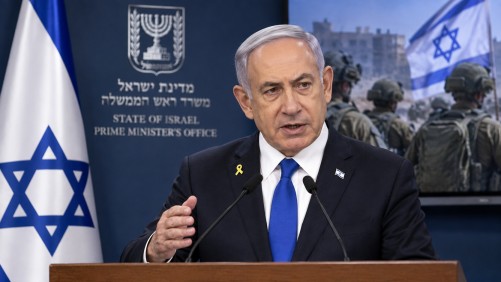
The ongoing debate over freedom of expression and military accountability in Israel has recently intensified, as Prime Minister Benjamin Netanyahu proposed legislative measures targeting individuals accused of tarnishing the reputation of the Israel Defense Forces (IDF) abroad. This development comes amid controversy surrounding a documentary that claims Israeli military operations in Gaza utilized artificial intelligence in ways that resulted in civilian casualties.
Netanyahu’s proposals include two significant bills: one that could lead to the revocation of citizenship for those found guilty of damaging the IDF’s reputation, and another that seeks to increase the penalties in defamation cases. These proposals have sparked a heated response, particularly in light of allegations made by the documentary “NAZA,” created by filmmakers Yuval Abraham and Rachel Szor, and supported by opposition politician Yair Golan.
The documentary’s claims have been met with strong denial from the IDF, which insists that decisions regarding military strikes are made by human personnel rather than being solely reliant on artificial intelligence. President Isaac Herzog has also voiced his disapproval of the idea of revoking the filmmakers’ citizenship, indicating that such a move is unlikely to succeed. Herzog criticized the documentary but emphasized that any grievances raised by soldiers should be addressed through established military procedures.
Under current Israeli law, citizenship can be revoked in severe cases involving terrorism or treason, contingent upon approval from relevant authorities and the judiciary. The proposed legislation by Netanyahu has therefore provoked a wider discourse on the balance between national security interests and individual rights, particularly freedom of expression.
Filmmakers Abraham and Szor have defended their work, asserting that their documentary is backed by substantial evidence and interviews. As the debate continues, it underscores the complex dynamics at play between governmental authority, military conduct, and the rights of citizens to critique state actions, especially in the context of the protracted and contentious Gaza conflict.