
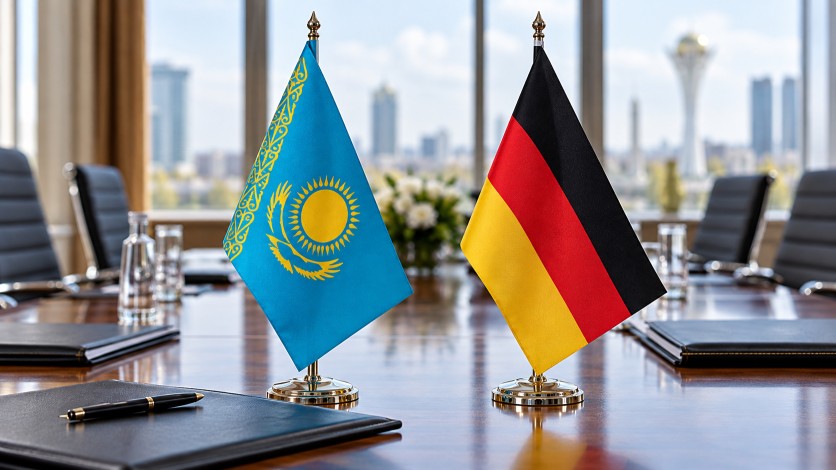
Kazakhstan and Germany are set to deepen their economic collaboration, focusing on enhancing bilateral ties in investment, infrastructure, industry, and transport. This commitment was underscored during talks held on September 29 between Kazakh President Kassym-Jomart Tokayev and German President Frank-Walter Steinmeier in Berlin. The discussions centered on strengthening the already robust partnership, which Tokayev emphasized, describing Germany as Kazakhstan’s key strategic ally in Europe.
A significant aspect of President Tokayev’s visit was the emphasis on economic cooperation. He proposed the creation of a Kazakhstan-Germany Investment and Financial Platform, which aims to support joint projects and facilitate increased investment flows between the two nations. This initiative reflects Kazakhstan’s intent to attract German investment and expertise, particularly in areas that can bolster its economic infrastructure.
In addition to political talks, Tokayev engaged with German business leaders to explore potential collaborations in various sectors. These discussions covered a range of topics including transport and logistics, industrial localization, engineering, metallurgy, and waste processing. A notable focus was the development of the Trans-Caspian International Transport Route and the modernization of Kazakhstan’s railway infrastructure, which are crucial for enhancing regional connectivity and trade.
Germany’s participation in Kazakhstan’s industrial and infrastructure projects was also a key discussion point, with the aim of providing German companies greater access to the Central Asian market. The expansion of manufacturing capabilities in Kazakhstan is seen as a strategic move to leverage the country’s geographic position and resources, thereby creating mutually beneficial economic opportunities.
This meeting marks a continued effort to build on three decades of bilateral relations, with both nations expressing optimism about future prospects. The initiatives discussed reflect a shared vision for a more integrated economic partnership, which could serve as a model for other international collaborations.