
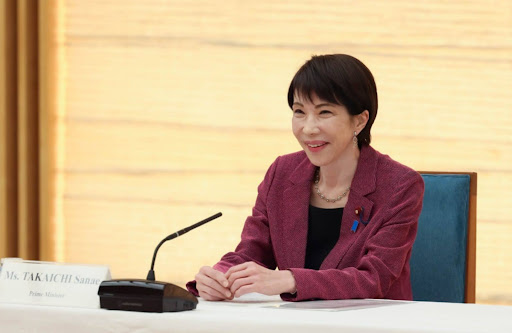
Japan has announced the largest-ever drawdown from its strategic oil reserves, with Prime Minister Sanae Takaichi confirming a release of about 80 million barrels to domestic refiners. Starting this week, the release — equal to 45 days of Japan’s total oil demand — surpasses all previous emergency drawdowns. A separately approved 15-day release of private-sector stocks adds to the scale of the response. The action is a direct consequence of the risk that the US-Israel conflict with Iran poses to the Strait of Hormuz, through which over 90% of Japan’s crude oil imports pass.
Japan’s near-complete dependence on Middle Eastern oil makes it uniquely vulnerable to any disruption at the Strait of Hormuz. Takaichi has not wavered in her position that Japan’s constitution bars military engagement in the region. She told US President Trump as much at a Washington summit, and has committed to diplomatic engagement as Japan’s primary foreign policy tool in the crisis. Domestically, the government has been no less decisive, deploying reserves, subsidies, and public communications in parallel.
The current release is 1.8 times the volume Japan unlocked after the 2011 Fukushima nuclear disaster. Japan’s total reserves of approximately 470 million barrels cover around 254 days of domestic oil consumption. Officials say the drawdown, while historic in scale, does not jeopardise Japan’s strategic energy position. The government is prepared for further releases if the situation warrants them.
The government has also intervened in the retail fuel market, introducing subsidies to cap gasoline at ¥170 per litre after prices reached a record ¥190.8. Weekly reviews ensure the subsidy stays calibrated to real-time oil market conditions. Consumer advocates have welcomed the swift and transparent policy response. The overall crisis management framework is among the most comprehensive Japan has ever deployed in peacetime.
Social media-driven panic about shortages of toilet paper and other household goods has prompted concern. The trade ministry issued an advisory confirming that 97% of Japan’s toilet paper is made domestically from recycled materials with no link to oil imports. The national paper industry association backed this message and confirmed supply stability. Japan is working carefully to prevent an energy crisis from becoming a broader crisis of consumer confidence.